
Hypoallergenic Dog Food: A Practical Guide for Dogs with Sensitive Stomachs and Skin
Many dog owners look for hypoallergenic dog food when their pet develops itchy skin, recurring ear problems, loose stools or frequent flatulence. Changing food can help some dogs, but it is important to understand what “hypoallergenic” means and when veterinary advice is needed.
At Riker’s Pet Food, we focus on practical, natural nutrition for dogs. Our range includes frozen raw, wet and dry food, natural treats and supplements, alongside our own Riker’s Recipe Superfood 65 Grain Free recipes.
🚚 Free local delivery with no minimum order to Ringwood, Fordingbridge, Verwood, Alderholt and Three Legged Cross.
🚚 Free 48-hour delivery on orders over £54.99 across England and Wales : excluding horse and farm feeds.
What does hypoallergenic dog food mean?
Hypoallergenic dog food is made with ingredients that are considered less likely to cause an allergic reaction or food sensitivity. However, the term does not mean that a food is guaranteed to suit every dog.
A recipe may be described as hypoallergenic if it includes:
- A single animal protein or a limited number of protein sources
- Ingredients that are less commonly fed, such as salmon, duck or venison
- No wheat, gluten, dairy or soya where these are suspected triggers
- Clearly named meat ingredients
- No artificial colours or unnecessary preservatives
- A simple recipe that is easier to monitor
A food allergy is different from a general intolerance. Allergies involve the immune system, while intolerances can cause digestive upset without an immune response. In both cases, the signs can overlap, so a vet may be needed to identify the cause.
Any ingredient can cause a reaction in an individual dog. A recipe labelled “hypoallergenic” is not automatically suitable for every sensitive dog.
Common signs of a food sensitivity
Food sensitivity can affect the skin, ears and digestive system. Look out for patterns rather than one isolated symptom.
Possible signs include:
- Itchy skin, paws or ears
- Frequent paw licking or chewing
- Red or irritated skin
- Recurrent ear problems
- Loose stools or changes in bowel movements
- Flatulence or a noisy stomach
- Vomiting
- Increased scratching after meals or treats
These signs can have many causes, including environmental allergies, parasites, infection, stress or an underlying health condition. Diet may be part of the picture, but it should not be assumed to be the only cause.
If symptoms are persistent, severe or getting worse, arrange a veterinary check before making major changes to your dog’s diet.

Common food triggers for dogs
Some ingredients are reported more often than others in dogs with food allergies or sensitivities. Common examples include:
- Beef
- Chicken
- Dairy products
- Wheat and gluten
- Soya
- Eggs
- Certain artificial colours, flavours or preservatives
This does not mean that beef or chicken are unsuitable for all dogs. They are nutritious protein sources for many pets. The important point is that an ingredient your dog has eaten regularly may be more likely to be investigated if symptoms develop.
Treats, chews, table scraps and supplements can also contain the suspected ingredient. A food trial will not give clear results if your dog is eating several different proteins alongside the main diet.
Keeping a simple food diary can help. Record the main food, treats, chews and any symptoms, including when they appear.
Can grain-free dog food help?
Some dogs are sensitive to wheat, maize or other grains. In these cases, a grain-free recipe may help remove a suspected trigger from the diet.
Grain-free dry dog food is made without cereals such as wheat, maize, barley or rice. Instead, the recipe may use ingredients such as sweet potato, peas, beans or other sources of carbohydrate.
Grain-free food is not necessary for every dog. If your dog digests grains well, there is no general reason to remove them. The most suitable food depends on your dog’s individual history, overall health and nutritional needs.
When comparing the best grain free dog food UK options, check more than the words on the front of the bag. Read the full composition and look for:
- A clearly named main protein
- A suitable meat content
- A complete and balanced recipe
- A manageable number of ingredients
- No ingredients your dog is known to react to
- Feeding guidance for your dog’s weight
- Clear information about additives and storage
What to look for in a sensitive diet
A good sensitive diet should be practical to feed and easy to monitor. Consider the following points.
A single or limited protein source
If you are investigating a food sensitivity, a single protein recipe can make it easier to identify a possible trigger. Salmon may be a useful option for some dogs, particularly if beef or chicken has already been part of their regular diet.
It is important to remember that salmon is not hypoallergenic for every dog. Your vet may recommend a specific novel or hydrolysed protein for a formal elimination diet.
High-quality, clearly named ingredients
Look for named ingredients such as chicken, beef or salmon rather than vague descriptions. A higher meat content can be useful for owners who prefer a more meat-led diet, provided the food is complete and suitable for the dog.
A complete food
The main diet should provide the nutrients your dog needs each day. Check that the packaging describes it as a complete food, rather than a complementary food intended to be fed alongside something else.
Grain-free options where appropriate
A grain-free recipe can be worth considering where wheat, maize or another grain is suspected to cause problems. It should still provide appropriate nutrition and should not be selected simply because grain-free sounds healthier.
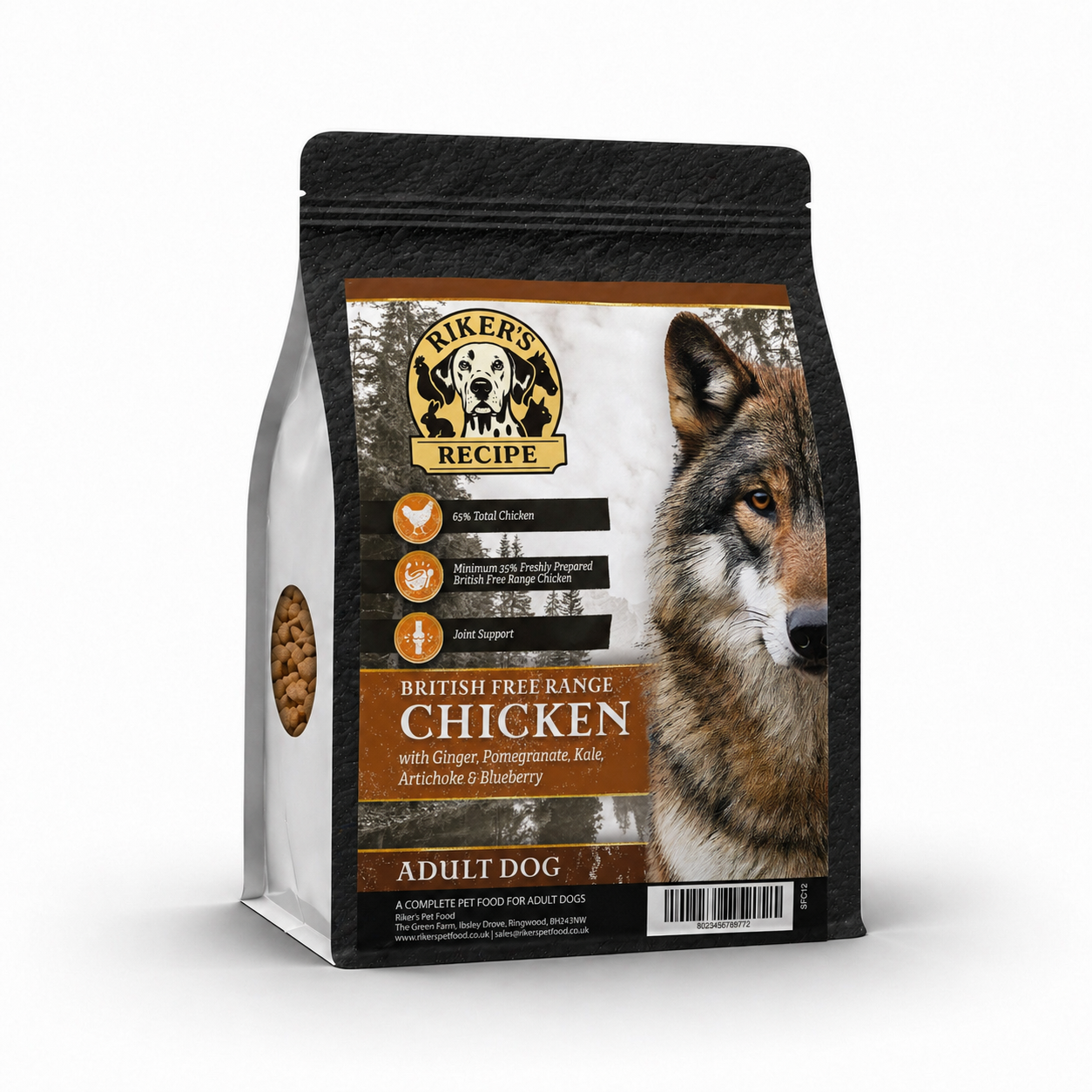
Riker’s Recipe Superfood 65 Grain Free
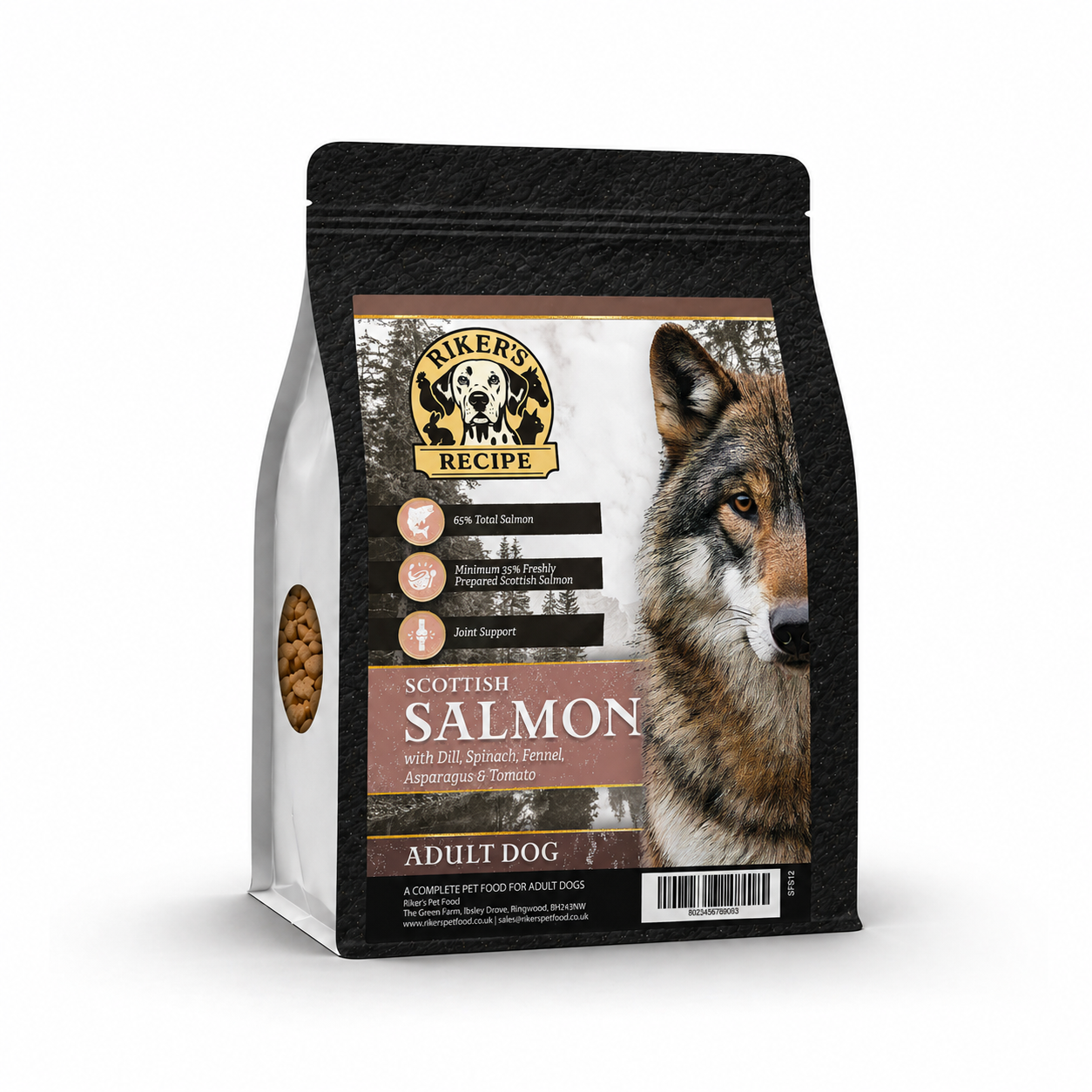
Our Riker’s Recipe Superfood 65 Grain Free range is a complete dry dog food made with 65% meat. It is grain-free and available in three recipes:
The range is available in:
- 2kg bags : £14.99
- 12kg bags : £69.99
The Scottish Salmon recipe may suit some dogs that do better with a fish-based food. However, if your dog has a confirmed allergy or is on a veterinary elimination diet, check the full ingredients with your vet before changing foods.
How to change your dog’s food safely
A sudden change can cause loose stools, even when the new food is suitable. A gradual transition over 7–10 days is usually more comfortable.
A simple plan is:
- Days 1–2: 75% current food and 25% new food
- Days 3–4: 50% current food and 50% new food
- Days 5–7: 25% current food and 75% new food
- Days 8–10: 100% new food
Some sensitive dogs need longer. If stools become loose, keep the current mixture for a few more days before increasing the new food.
During a food trial:
- Keep treats and chews consistent
- Avoid table scraps
- Provide fresh drinking water
- Feed measured portions
- Record stools, itching and ear symptoms
- Avoid introducing several new products at once
Skin symptoms may take longer to change than digestive symptoms. Follow your vet’s recommended trial period before deciding whether a food is suitable.
When to speak to your vet
Speak to a vet if your dog has ongoing digestive or skin problems, especially if you notice:
- Repeated vomiting or diarrhoea
- Blood in the stool
- Weight loss
- Low energy
- Severe or constant itching
- Recurrent ear infections
- Pain, swelling or inflamed skin
- Symptoms that do not improve after a careful food change
Your vet may recommend an elimination diet, a hydrolysed veterinary diet or further investigation. Do not stop a vet-prescribed diet or treatment without veterinary advice.
Riker’s also supplies frozen raw food, wet food, natural treats and supplements. These may be useful as part of an everyday feeding routine, but treats and extras should be checked carefully if your dog is following a strict elimination diet.
Hypoallergenic dog food FAQ
Is hypoallergenic dog food suitable for every dog?
No. “Hypoallergenic” means that the recipe is designed to reduce the likelihood of reactions, not that it is guaranteed to suit every dog. Dogs can react to different ingredients.
Is grain-free dry dog food better?
Not necessarily. Grain-free food may help dogs that do not tolerate a particular grain, but it is not automatically better for every dog. Choose a complete recipe that suits your dog’s individual needs.
Is salmon good for dogs with sensitive skin?
Some dogs may do well on a salmon recipe, but food cannot treat every cause of itchy skin. Persistent itching should be discussed with a vet.
Can treats affect a food trial?
Yes. Treats, chews and leftovers can contain the same ingredients you are trying to avoid. Keep extras consistent and check their composition.
Find natural pet food near Ringwood
We are an independent, family-run pet food business based near Ringwood, on the edge of the New Forest. We provide practical advice and a broad choice of natural pet food UK customers can order for everyday feeding.
Visit Riker’s Pet Food online or call in at the shop near Ringwood. Collection is available from Green Farm, Ringwood, BH24 3NW.
For local customers, delivery is free with no minimum order to Ringwood, Fordingbridge, Verwood, Alderholt and Three Legged Cross. We also offer free 48-hour delivery on orders over £54.99 across England and Wales, excluding horse and farm feeds.