
What Is Natural Pet Food? A Helpful Guide for UK Pet Owners
Natural pet food is a popular choice for UK owners who want to understand more about what goes into their pet’s bowl. However, the word natural can describe many different types of food. It does not automatically mean raw, grain-free, organic or suitable for every pet.
This guide explains what natural pet food means, how it differs from other diet types, and what to check before choosing food for dogs, cats or small animals.
At Riker’s Pet Food, we’re an independent, family-run business based near Ringwood. We specialise in raw and natural nutrition, alongside wet food, dry food, treats, supplements and everyday pet supplies. Our aim is to make good-quality feeding practical and affordable, with straightforward advice from a local team.
What does natural pet food mean?
Natural pet food is generally made with recognisable ingredients and limited artificial additions. Depending on the recipe, this may include:
- Named meat or fish
- Vegetables, fruit or herbs
- Animal fats and oils
- Vitamins and minerals
- Ingredients that have been gently cooked, dried or frozen
A natural food may be raw, wet, dry, air-dried or freeze-dried. The format alone does not decide whether a food is natural.
It is also important to remember that “natural” is not a guarantee that a food is complete or suitable for your pet. Check the packaging for:
- The intended species
- The life stage, such as puppy, adult or senior
- Whether the food is labelled complete or complementary
- Feeding instructions
- Ingredient and nutritional information
- Storage and handling advice
A complete food is designed to provide all the nutrients a pet needs when fed according to the manufacturer’s instructions. A complementary food is intended to be fed alongside another food.
Natural, raw, grain-free and high-meat diets
These terms are often used together, but they describe different features.
| Diet term | What it usually means |
|---|---|
| Natural pet food | Made with recognisable ingredients and limited artificial colours, flavours or preservatives |
| Raw pet food | Uncooked ingredients, often including meat, bone and offal, supplied chilled or frozen |
| Grain-free food | Made without grains such as wheat, maize, barley or rice |
| High-meat food | Contains a relatively high proportion of animal ingredients |
| Organic food | Made with ingredients produced under recognised organic farming standards |
A food can be natural without being raw. It can also be natural without being grain-free.
Raw dog food
Raw feeding for dogs usually involves uncooked meat and other animal ingredients. Commercially prepared raw foods are often supplied frozen, making them easier to store and portion.
For everyday feeding, look for a complete frozen raw dog food unless you have advice from a qualified canine nutrition professional. Homemade raw diets can be balanced, but they require careful planning to provide the correct levels of calcium, vitamins, minerals and essential fats.
Our raw dog food range includes prepared options such as:

Always follow the storage, defrosting and handling guidance supplied with the product.
Grain-free dog food
Grain-free food does not contain ingredients such as wheat, maize, barley or rice. These recipes may use alternatives such as sweet potato, potato or peas.
Some owners choose grain-free food because their dog appears sensitive to a particular ingredient. However, grain-free does not automatically mean hypoallergenic, and grains are not unsuitable for every dog.
If a dog has recurring itching, ear problems, digestive upset or other possible allergy symptoms, speak to a vet. A controlled elimination diet may be needed to identify the specific trigger.
High-meat dog food
High-meat recipes contain a larger proportion of animal ingredients than many standard diets. It is helpful to look for a clear percentage and named proteins, such as chicken, beef, lamb or salmon.
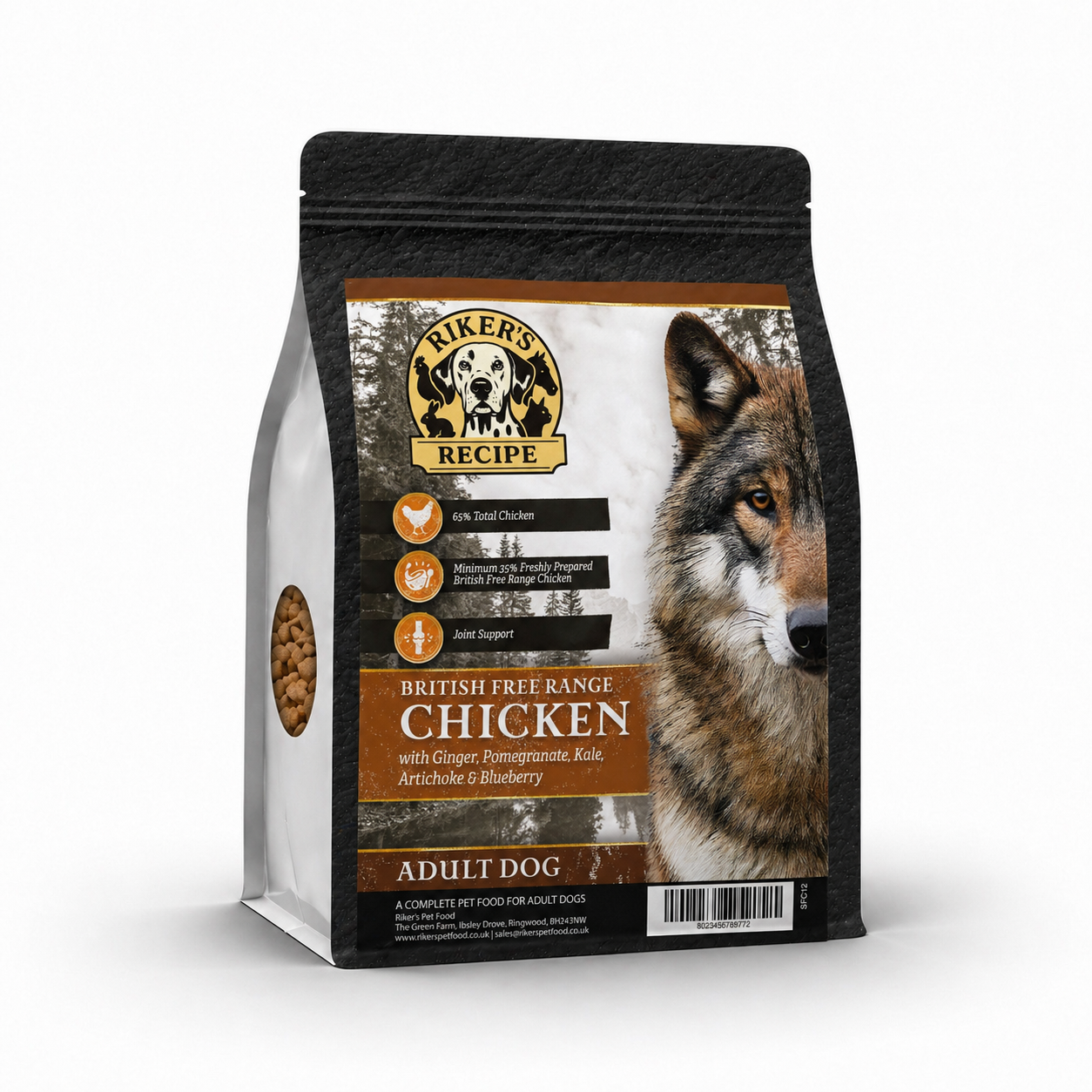
Our Riker’s Recipe Superfood 65 Grain Free range contains 65% meat and is available in several recipes:
The British Free Range Chicken and Scottish Salmon recipes are available in 2kg and 12kg bags. The Angus Beef recipe is available in a 12kg bag. Prices listed on the website include £14.99 for selected 2kg bags and £69.99 for selected 12kg bags.
How to read a natural pet food ingredient list
The front of a packet can help you compare products, but the ingredient list provides more useful detail.
1. Look for named ingredients
Specific descriptions such as chicken, Angus beef or Scottish salmon make it easier to understand the recipe.
Less specific terms, such as “meat derivatives” or “animal derivatives”, provide less detail. These ingredients can still have a nutritional purpose, but clear labelling makes comparison easier.
2. Check the order of ingredients
Ingredients are generally listed by weight. Those appearing near the beginning usually make up a larger proportion of the recipe.
For dry food, remember that fresh meat contains water, while meat meal is more concentrated. Comparing recipes only by the first ingredient can therefore be misleading. Look at the full list and the stated meat percentage.
3. Check whether it is complete
A natural treat, topper or chew is not normally intended to replace a complete meal. Check whether the food is labelled complete or complementary.
This is particularly important for:
- Puppies and kittens
- Pregnant or nursing pets
- Older animals
- Pets with medical conditions
- Pets eating a home-prepared diet
4. Review the analytical constituents
The analytical constituents show information such as:
- Protein
- Fat
- Fibre
- Ash
- Moisture
These figures help you compare products, but they do not tell the whole story. Your pet’s age, body condition, activity level and health also matter.
5. Check for the ingredients your pet needs to avoid
If your pet has a known sensitivity, read the complete label rather than relying on phrases such as “natural” or “sensitive.”
A hypoallergenic dog food may be formulated to avoid certain common ingredients, but the term can be used differently between products. Veterinary advice is the safest route where a genuine food allergy is suspected.
Choosing natural food for dogs
The most suitable natural dog food UK owners choose will depend on the individual dog.
Consider:
- Age and life stage
- Breed and body size
- Activity level
- Current weight and body condition
- Digestive sensitivity
- Known allergies
- Whether you prefer raw, wet or dry food
- Available freezer and storage space
A complete natural dry food can be convenient for everyday feeding. Wet food can help add moisture and may suit dogs that prefer a softer texture. Frozen raw dog food can be useful for owners who want to include raw meals and have suitable storage available.
Introduce any new food gradually unless your vet advises otherwise. A seven-day transition is a useful starting point for many dogs, but sensitive dogs may need longer. Monitor appetite, stools, energy and body weight.
Our previous guide to transitioning dogs to raw food includes practical advice on portions, storage and introducing new proteins.
Choosing natural food for cats
Cats have different nutritional requirements from dogs. They are obligate carnivores and need a diet formulated specifically for cats.
When comparing natural cat food, check that it is:
- Complete for cats
- Suitable for the cat’s life stage
- Based on appropriate animal proteins
- Fed according to the product instructions
- Stored and handled safely
Do not use dog food as a long-term replacement for cat food. Cats require nutrients, including taurine, in amounts that dog food may not provide.
Raw feeding for cats should also be carefully planned. Commercially prepared complete raw food is generally simpler than creating a homemade diet, but owners should still follow hygiene instructions and speak to a vet if the cat is young, elderly, pregnant or unwell.
Choosing natural food for small animals
Small animals need species-specific diets. “Natural” treats are not automatically suitable for every rabbit, guinea pig, hamster or other small pet.
For example:
- Rabbits and guinea pigs generally need constant access to good-quality hay, with suitable fresh food and measured pellets.
- Hamsters need a balanced species-appropriate mix, with treats given sparingly.
- Guinea pigs require a reliable source of vitamin C.
- Sugary treats should be limited, even when they are described as natural.
Check the needs of the individual species before changing food. Our team can help with selected small-animal food and supplies, but a vet should advise on pets with health problems or unusual dietary needs.
Natural treats and supplements
Natural treats can be useful for training, rewarding good behaviour and supporting enrichment. They should remain a small part of the overall diet.
Our dried natural dog treats include:
- Pizzles : £1.99
- Dried Sprats 100g : £2.50
- Furry Rabbits Ears : £1.99
- Pigs Ears : £1.55
- Cow’s Ear : £1.00
- Yackers Medium Chew : £5.99
Choose a chew that matches your dog’s size and chewing habits, and supervise your dog while they use it. Treats should be included in the daily food allowance where necessary.
Supplements can support a specific need, but they are not a substitute for a complete diet. Speak to your vet before using supplements for a medical condition or alongside prescribed medication.
Practical delivery information from Riker’s Pet Food
🚚 Free local delivery with no minimum order is available in:
- Ringwood
- Fordingbridge
- Verwood
- Alderholt
- Three Legged Cross
We also offer free 48-hour delivery on orders over £54.99 across England and Wales : excluding horse and farm feeds.
Our opening hours are:
- Monday to Friday: 9am–12pm
- Saturday: 9am–2pm
- Sunday and bank holidays: closed
You can browse the Riker’s Pet Food online shop or read more about our raw dog food options.
A simple checklist for choosing natural pet food
Before buying, check:
- Is the food made for your pet’s species?
- Is it complete or complementary?
- Are the main ingredients clearly named?
- Is the meat or fish content stated?
- Does it suit your pet’s age and lifestyle?
- Does it contain an ingredient your pet needs to avoid?
- Can it be stored and handled correctly?
- Will the change be introduced gradually?
- Is veterinary advice needed?
Natural pet food can be raw, wet or dry. The best choice is the one that provides appropriate nutrition, suits your pet’s needs and works reliably for your household. At Riker’s Pet Food, we’re here to help customers compare practical options, from frozen raw dog food and high-meat grain-free dry food to wet food, natural dog treats and supplements.