
What to Feed Rabbits and Guinea Pigs: A Simple Guide to Healthy Small Animal Diets
Rabbits and guinea pigs have simple but specific dietary needs. Their digestive systems are designed for a high-fibre diet based mainly on grass and hay, supported by fresh leafy greens, a small amount of suitable pellets and constant access to clean water.
Getting the balance right is an important part of small animal care. The right diet supports healthy digestion, natural dental wear, a suitable body weight and everyday wellbeing.
At Riker’s Pet Food, we’re an independent, family-run business based near Ringwood in the New Forest. We stock practical food and care products for rabbits, guinea pigs and other small animals, with local advice and delivery available.
Hay should be the foundation of the diet
Fresh, good-quality hay should be available at all times. It should make up approximately:
- Around 85% of a rabbit’s diet
- Around 80–90% of a guinea pig’s diet
A rabbit or guinea pig should never run out of hay. Offer fresh hay every day and replace any hay that becomes damp, dirty or heavily soiled.
Suitable types include meadow hay, timothy hay, orchard hay and other good-quality grass hays. Some pets prefer a particular texture or smell, so offering more than one type can encourage natural foraging.
Look for hay that is:
- Dry and fresh-smelling
- Free from mould and damp patches
- Low in dust
- Green or golden in colour
- Suitable for feeding, rather than only bedding
A small amount of bedding hay may be nibbled, but feeding hay is usually fresher, more nutritious and better suited to making up the main part of the diet.
Our small animal hay range includes small bags for everyday use and larger bales for homes with several pets. The collection includes products such as a Small Bag of Hay for £2.99 and a Hay Bale for £7.50 : availability and prices may change.

Why hay matters for digestion and dental health
Hay provides the long-strand fibre that rabbits and guinea pigs need to keep food moving through the digestive system. Without enough fibre, they can develop serious digestive problems, including a reduced appetite and gut stasis.
Chewing hay also takes time and uses the side-to-side chewing action that helps wear down their continuously growing teeth. If a pet eats too little hay and too much concentrated food, its teeth may become overgrown or develop painful points.
Regular hay intake is particularly important because dental problems can make chewing uncomfortable. A rabbit or guinea pig that suddenly stops eating hay, eats less generally, drools, loses weight or produces fewer droppings should be assessed by a vet promptly.
The RSPCA’s rabbit diet guidance and PDSA’s feeding advice both emphasise the importance of hay or grass as the main part of a rabbit’s diet.
Leafy greens and vegetables
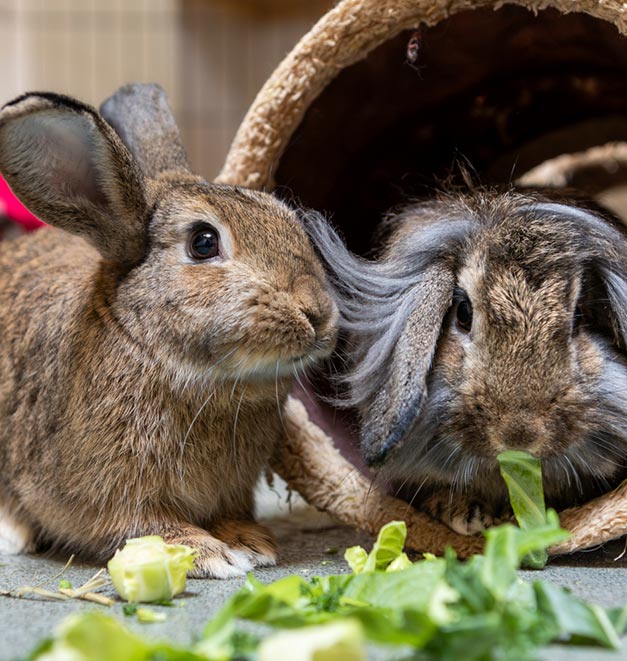
Fresh leafy greens and vegetables provide variety and additional nutrients. They can also make feeding more interesting when scattered around the enclosure or hidden in hay.
Safe options for rabbits and guinea pigs
Suitable choices can include:
- Romaine or cos lettuce
- Spring greens
- Rocket
- Watercress
- Bell peppers
- Coriander
- Basil
- Mint
- Parsley
- Kale
- Celery, including the leaves
- Cucumber
- Courgette
- Broccoli in small amounts
- Carrot tops
- Fennel
Wash fresh food before feeding it. Only offer plants and herbs that have been correctly identified and have not been exposed to pesticides, weed killer or other chemicals.
Avoid iceberg lettuce. It has little nutritional value and can contribute to digestive upset when fed in large amounts. Do not feed unknown garden plants or flowers, as some common plants are poisonous to rabbits and guinea pigs.
How much fresh food should they have?
For a healthy adult rabbit, fresh food may make up around 10% of the daily diet. A practical guide is an adult-sized handful of mixed leafy greens and herbs, split between meals if preferred.
For a guinea pig, a small bowl or roughly a teacup-sized portion of suitable fresh greens per day is a commonly used guide. The exact amount depends on the guinea pig’s size, age, weight and health.
Introduce new vegetables gradually. Offer a small amount of one new food, then monitor appetite and droppings before adding another. This makes it easier to identify foods that do not suit an individual pet.
Guinea pigs need vitamin C every day
Guinea pigs cannot make their own vitamin C, so they need a daily dietary source. A deficiency can affect general health and may lead to problems such as poor appetite, weakness or changes in joints and bones.
Good sources of vitamin C include:
- Red, yellow or green bell peppers
- Suitable fresh greens
- Guinea pig pellets with added vitamin C
- Grass-based guinea pig pellets
Bell peppers are a useful everyday option because they are generally well accepted and can be offered in appropriate portions. Vary the colour and include other safe vegetables so that the diet remains balanced.
Choose food made specifically for guinea pigs. Rabbit pellets are not suitable as a regular replacement because they do not meet a guinea pig’s vitamin C requirements.
Vitamin C breaks down over time, particularly when exposed to light, heat and water. Adding it to a drinking bottle can also make the amount consumed difficult to measure. A suitable guinea pig pellet and fresh vegetables are usually the most practical daily sources. Speak to a vet before using a separate supplement, especially if your guinea pig is unwell or has stopped eating.
Our guinea pig food collection includes Burgess Excel Guinea Pig Nuggets with Mint. The listed prices include a 2kg bag at £7.60 and a 10kg bag at £23.50 : check the product pages for current availability.
Pellets are a measured supplement
Rabbit food and guinea pig food should complement hay rather than replace it. Pellets are concentrated, so only a small, measured portion is needed.
Choose plain, uniform pellets or nuggets made for the correct species. Follow the manufacturer’s feeding guidance, and adjust the portion according to your pet’s weight, age, activity level and health.
As general guidance:
- Rabbits may need around 5% of their diet as pellets. Some welfare guidance uses approximately 15g per kg of body weight per day.
- Guinea pigs should receive a small measured amount of guinea pig-specific pellets, alongside unlimited hay and fresh vegetables.
Avoid continually topping up the bowl. If too many pellets are available, some pets will eat the concentrated food first and consume less hay. Scattering a measured portion around the enclosure can encourage movement and natural foraging.
Why muesli-style mixes are best avoided
Muesli-style mixes often contain a selection of flakes, seeds, grains, coloured pieces and pellets. They may look varied, but they can encourage selective feeding. This means a rabbit or guinea pig may eat the sweeter or starchier ingredients and leave the higher-fibre pieces behind.
Regularly feeding muesli-style food can contribute to:
- Reduced hay intake
- Weight gain
- Dental problems
- Digestive upset
- An unbalanced diet
Plain pellets or nuggets make it easier to know what your pet is eating. They should still be fed in moderation, with hay remaining the main food.
If your rabbit or guinea pig currently eats muesli, change to a suitable pellet gradually over two to four weeks. Mix a small amount of the new food with the old food, increasing the new food slowly while reducing the original mix.
Fresh water is essential
Rabbits and guinea pigs need constant access to fresh, clean drinking water. Provide water in a sturdy bowl, a bottle or both, depending on what your pet uses reliably.
Check water at least daily and make sure:
- Bowls are clean and cannot easily be tipped over
- Bottle nozzles are not blocked
- Water has not frozen in cold weather
- Containers are free from algae and dirt
- Water is changed regularly
A pet that drinks noticeably more or less than usual should be monitored. Changes in drinking, eating or droppings can indicate a health problem.
Change food gradually
Dietary changes should be made slowly over two to four weeks. This includes changing pellets, introducing new vegetables or moving from a muesli-style mix to plain nuggets.
A gradual transition can involve:
- Mixing a small amount of the new food with the current food.
- Increasing the new food slowly.
- Reducing the old food in stages.
- Monitoring appetite, weight and droppings.
- Slowing the change if digestive upset occurs.
Never reduce the existing food so quickly that your pet stops eating. Contact a vet immediately if a rabbit or guinea pig stops eating, produces very few droppings or appears unwell.
Safe treats should remain occasional
Treats should be small and infrequent. Suitable options may include a small piece of bell pepper, a little fresh herb or a limited amount of rabbit- or guinea-pig-safe dried forage.
Fruit and root vegetables such as carrot contain more sugar, so they should only be offered occasionally and in small portions. Avoid sugary treats, cereal-based snacks, chocolate, biscuits and foods intended for other species.
Treats can also be used as enrichment. Hide a few safe leaves in a pile of hay or scatter them around the enclosure to encourage natural searching and movement.
Small animal food and care from Riker’s Pet Food
We keep our range straightforward and practical for everyday pet care. As well as rabbit food and guinea pig food, we stock:
Our small animal bedding range includes straw, wood shavings, hemp bedding and paper flakes. Keep food and bedding dry, store opened bags securely and check hay regularly for dampness or mould.
🚚 Free local delivery with no minimum order to Ringwood, Fordingbridge, Verwood, Alderholt and Three Legged Cross.
🚚 Free 48-hour delivery on orders over £54.99 across England and Wales : excluding horse and farm feeds.
A simple daily diet checklist
For most healthy adult rabbits and guinea pigs, the daily routine should include:
- Unlimited fresh feeding hay
- A small variety of washed leafy greens
- Species-appropriate measured pellets
- Fresh, clean water
- Safe treats only, and only occasionally
- Regular checks of appetite, droppings, teeth, weight and behaviour
These are general guidelines. Young, elderly, pregnant, nursing, overweight or unwell pets may need a different diet. Consult a vet for individual advice, particularly if your pet’s eating, drinking or droppings change.